They’re pieces of memory and grit, written in the same voice I use when I’m talking to the people I trust.
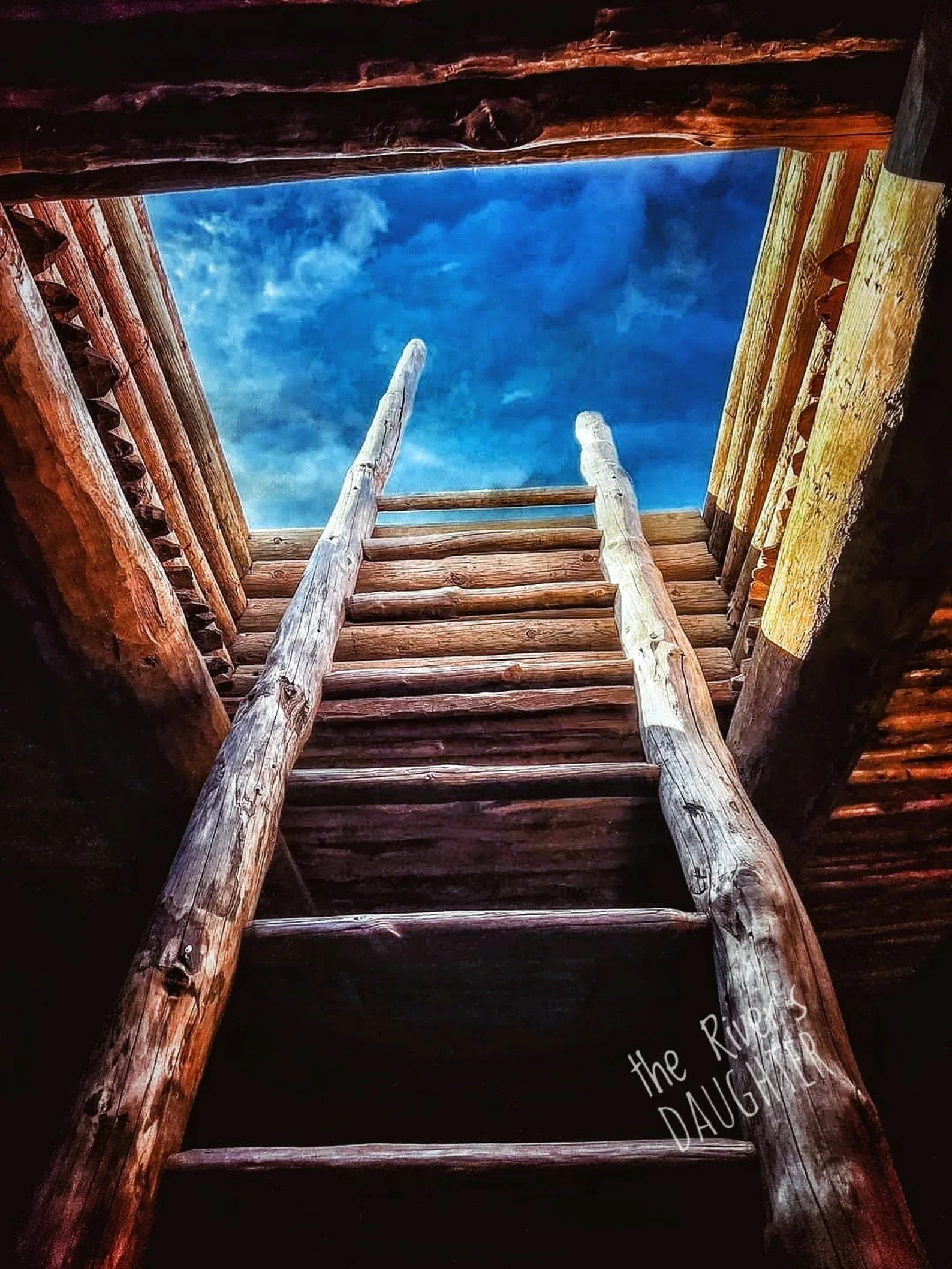
This Ladder
I've climbed a lot of ladders in my life.
Out of high school.
In my early twenties.
My late twenties.
My thirties.
My forties.
Every decade, another climb.
Every decade, another fall.
I used to think the falling meant I was failing.
But now I understand something deeper:
every time I fell, the ladder changed—
and so did I.
My ladder isn't made of clean, perfect lumber.
It's built from trial and error.
From mistakes that taught me what materials not to use.
From lessons that showed me what won't hold up
under pressure, weight, or weather.
From the kind of truth you only learn the hard way.
So I rebuilt.
And rebuilt.
And rebuilt again.
Some rungs are taped.
Some are tie-wired.
Some are re-fastened with whatever I had at the time.
But each rebuild made the ladder stronger.
Each fall taught me how to climb
with more steadiness,
more awareness,
more intention.
Now I choose solid, hardened materials—
the kind that don't rot in the sun,
the kind that get stronger
with every step I take.
This ladder is designed differently.
With every foot I lift,
every inch I rise,
the structure tightens.
The weight I carry doesn't weaken it—
it reinforces it.
My climb strengthens the ladder itself.
And because I've chosen to recover loudly,
others can see the climb.
They can see the falls,
the rebuilds,
the grit,
the stubborn hope.
They can see that no matter
how many times I've hit the ground,
I've stood back up
and reached for the next rung.
I've failed more times
than most people have tried.
But that's why my ladder holds.
That's why it lasts.
That's why it can become
more than a tool for me—
it can become a guide for others.
A ladder built from experience.
A ladder that doesn't break under weight.
A ladder that shows the way up.
A ladder that holds for a lifetime.
This ladder I climb ...
isn't just taking me somewhere new.
It's becoming something
others can climb too.
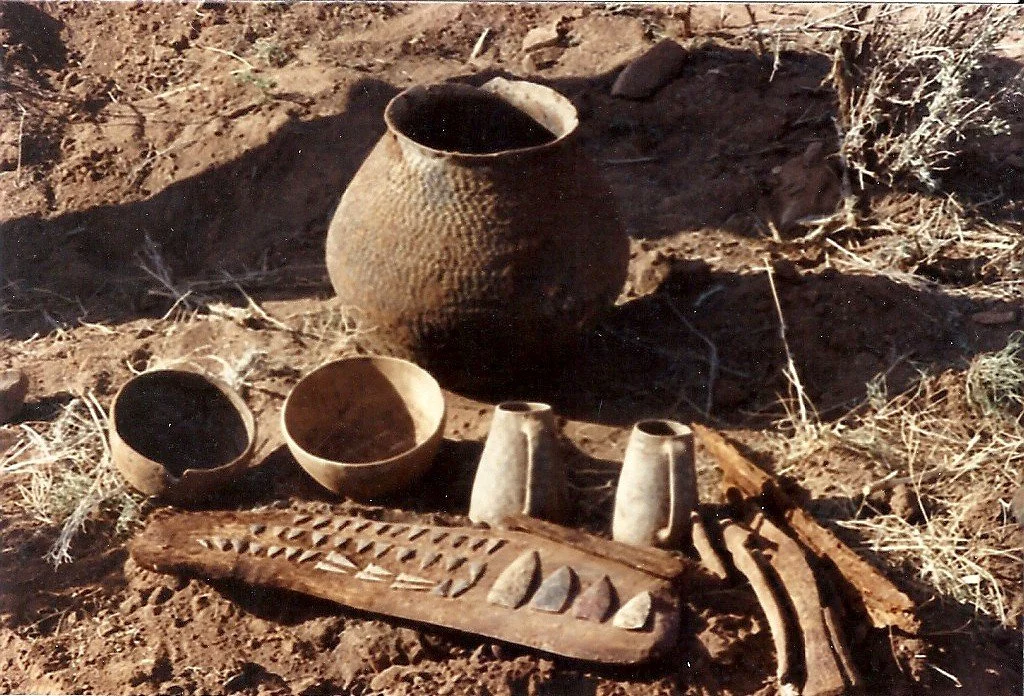
I Got It From My Dad
I got it from my Dad, they say,
the hands, the stone, the art,
as if talent were a river stone,
And not the edge that carved a boy,
I got it from my Dad, they say,
but not the way they mean.
I got the shadow, the silence,
and the flinch before the storm.
I got the fear of being seen,
And the hiding when I was,
I got the talent too,
but I earned it in the dark,
And now I sit with Hunter,
obsidian in his hands,
same stone that cut me open,
now shining in his light.
I show him how to strike the edge,
how to listen to the stone,
how to shape something sharp
without causing harm,
He gets the craft
without the cramp.
He gets the fire
without the burn.
He gets the art
without the ache.
I got it from my Dad, they say,
yeah —
but Hunter gets it from me.
not the wound, and not the weight,
But a future carved, from old stone,
he learns to make something sharp,
knowing not to cut his own.
“Which Englehart?”
There’s a certain way people say my name around here.
A tilt of the head.
A pause.
A little recalibration behind the eyes.
“Oh... you’re an Englehart?”
And then, softer —
“Which Englehart?”
See, around here, my last name carries weight.
History.
Reputation.
A kind of hometown mythology.
My great-uncle Stanton spent over thirty years shaping
artists at Fort Lewis College.
His paintings hang in the Durango ER —
a place I’ve been to more times than I’d like to admit.
His work is scattered across this community like
landmarks,
and people speak his name with reverence.
Then there was Jim Englehart,
the wrestling and football coach.
There’s a field named after him —
Englehart Field —
because he poured decades into the kids of this valley.
Men still talk about him like he’s stitched into the turf.
Chuck Englehart was the banker —
the man who handed out the loans that built half the county.
People still live in houses he believed they could afford.
Brothers,
raised right here in the same dirt I walk on,
each one leaving behind a reputation
people still speak of with pride.
And then there’s my dad’s cousin Rob —
the kind of man everyone knows, everyone likes,
everyone speaks of with warmth.
So when someone hears my last name,
they think of all that.
The art.
The athletics.
The service.
The legacy.
And then they look at me.
And there’s that pause.
That shift.
That quiet recalculation.
Because I’m the Englehart
who made the front page of the Cortez Journal seven times.
The Englehart who was Montezuma County’s Most Wanted —
not once,
not twice,
but three times.
The Englehart who showed up on TV across four states
because I don’t do anything small —
not the rises,
not the falls.
I’m also the Englehart who built two families in this valley...
and lost both of them
to the same addictions that nearly took my life.
People here watched me love,
lose,
break,
and try again.
They watched me fall in public
and get back up in public
because my life has never been quiet.
Everyone knows me.
Everyone’s watched me crash and climb and crash again.
And somehow, they’re still rooting for me.
Therapists ask,
“How do you learn best?”
And I tell them the truth —
straight from the heart:
“The fucking hard way!”
So when someone asks,
“Which Englehart are you?”
I chuckle inside.
Because the real answer is this:
I’m the one who carries the whole damn story —
the glory,
the shame,
the talent,
the trouble,
the legacy,
the fall,
the rise,
the art,
the hammer,
the prison,
the comeback,
the families I built,
the families I lost,
and the man I’m becoming now.
I’m the Englehart
who lived the chapters no one needs to touch.
And I’m the one
who’s finally ready
to tell them.
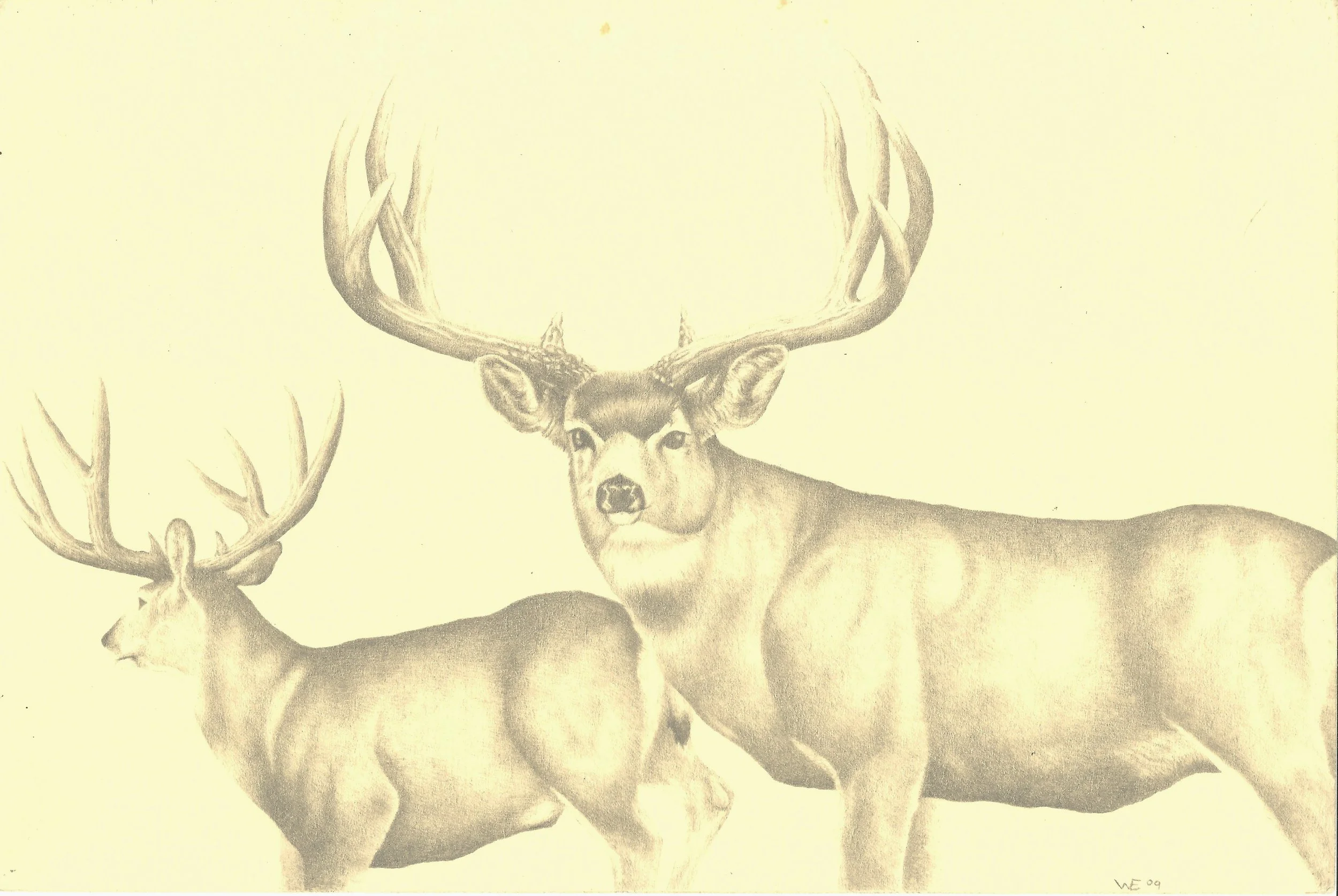
Resurrection in Graphite
There was a boy with graphite on his fingers —
a boy who could pull whole worlds
out of a sheet of paper like it was nothing.
A boy who believed you could draw the future
before you lived it.
He showed his father the door he wanted to walk through...
and the man who once dreamed in color
answered in thunder.
“You’ll never make a living paintin’ pretty pictures,” he said —
and the sky slammed shut.
So the boy set his pencils down.
Picked up a hammer.
Followed a man who couldn’t follow his own dreams.
And the artist went underground —
buried under lumber and labor,
under whiskey and years,
under a guise that wasn’t his.
But destiny is stubborn.
In a cell with nothing but time,
the buried one clawed his way back —
pencil on state-issue paper,
shadows on concrete walls,
a resurrection in graphite.
He rose in the oldest prison in the West —
became the best artist among two thousand men.
Rebuilt an art shop he wasn’t even allowed to use.
Because talent doesn’t die.
It waits.
It watches.
It whispers.
And now he stands in the open again —
hands steady, mind clear —
listening to the heartbeat
of the young artist he once was.
The hammer kept him alive.
The art will set him free.
And the man he is now is strong enough
to dig up the buried artist,
brush off the dirt,
raise him into the light...
and let him breathe again.
Where Oh Where Can My Big Blue Be?
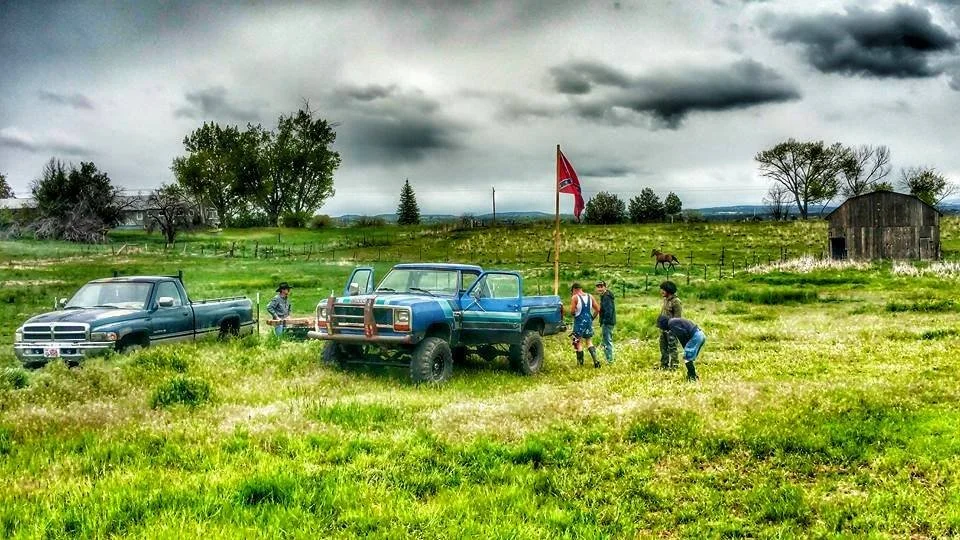
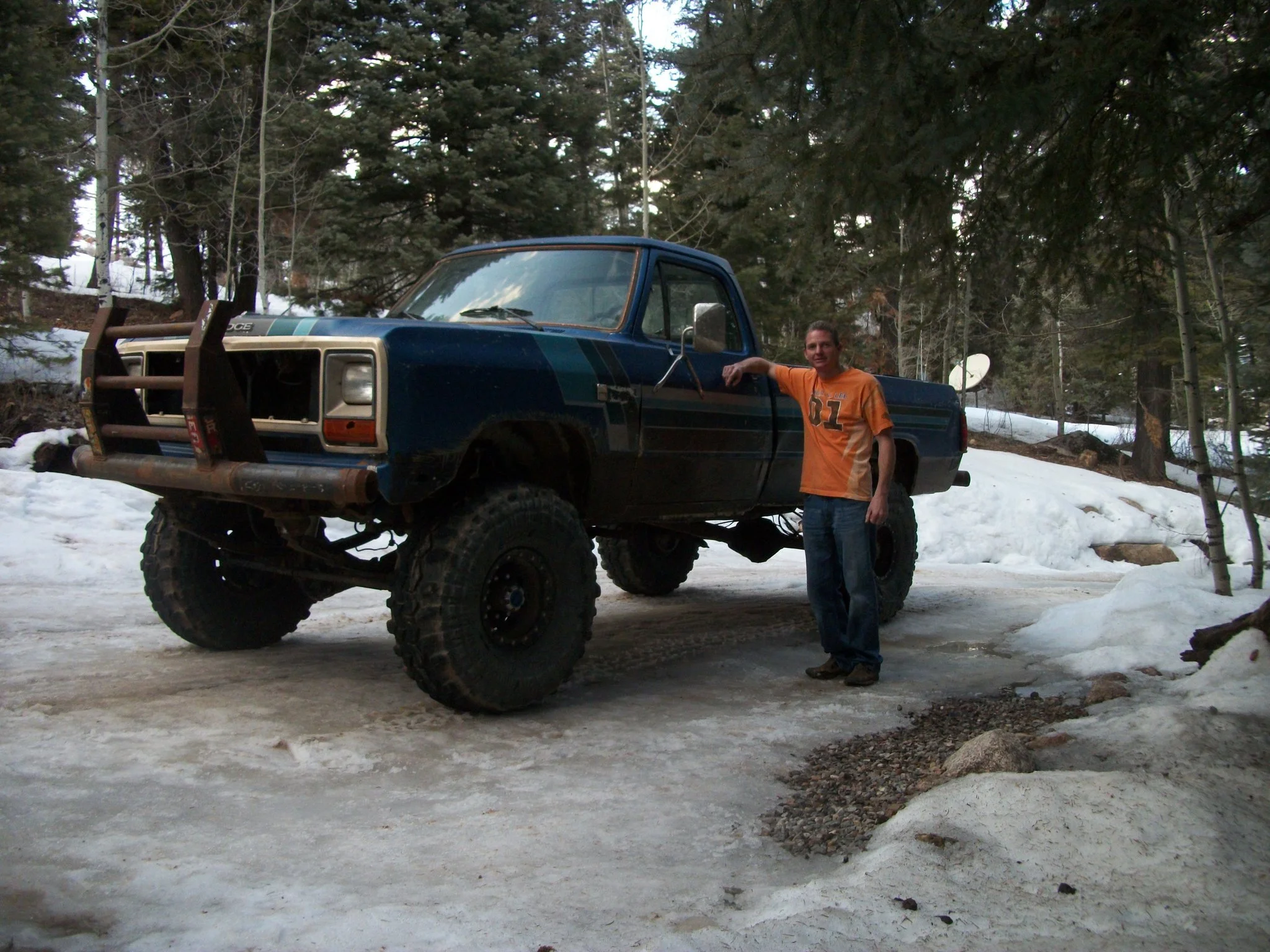
I took Big Blue up the mountain
before our season broke,
that sheepherder tent waiting,
like a memory stitched in smoke.
Telluride dust, still on my boots,
good hunting clothes, smelling clean,
’til that damn newfangled fuel spout
splashed gas all over my dream.
Half Chevy, half Dodge, all trouble-
that truck stood tall as pride,
and I cussed her while I fueled her,
but she always let me ride.
Wayne said, “Sit Sawmill Pond, little brother.
Quit runnin’ bulls down with a bow.
You want your bull, you sit and wait.”
So I did, mad, soaked, and slow.
Pack full of beer, like old gear,
Coors cans cold as spite,
nothing echoes through timber-
like a beer cracked at golden light.
Then thunder on hooves came a charging-
I grabbed my bow, heart tight...
and out stepped six damn moo cows,
ruining my perfect sight.
I threw sandstone like warnings,
waving my arms a fool,
and that’s when the brush was shaking
with a bull that looked untrue.
Ugliest thing I’d ever seen,
antler growing from his brow,
legal by a whisper-
but I wasn’t picky now.
Fifteen yards and broadside,
I sent that arrow true,
and he died like a Western outlaw
stumbling right into the blue.
Two full rolls in the cattle pond,
bubbles rising where he sank,
just one crooked antler pointing
at the sky- growing cold and blank.
Dragged him out, soaked and bleeding,
field dressed him in the dark,
my knife sharp enough for second blood-
elk and I both left our mark.
Then came the long walk homeward,
cold, dizzy, half-alive,
thinking Big Blue wasn’t far...
but I’d wandered off the drive.
Wrong ridge, wrong road, wrong country,
just me and the night and the trees,
so I sang to keep my legs moving,
a song born out of need:
“Oh where, oh where can my Big Blue be,
oh where, oh where can she be...
with her tires so big and her beer so cold,
oh where, oh where can she be...”
Found her hours later,
faithful, waiting just for me-
that truck was more than steel and bolts,
she was part of my history.
And here’s the cruel-sweet irony:
I’ve lost her again, its sad to say-
Another divorce, another heartbreak,
another piece torn away.
Lost her once in the last divorce,
found her when I got free,
bought her back like a promise
that some things return to me.
Now sober, steady, rebuilding,
the beer don’t fit the scene-
but the ache still knows the lyrics
of the song I used to sing.
So here I stand years later,
older, clearer, finally me...
still humming that same old chorus:
“Oh where, oh where can my Big Blue be...”
Verdict Morning
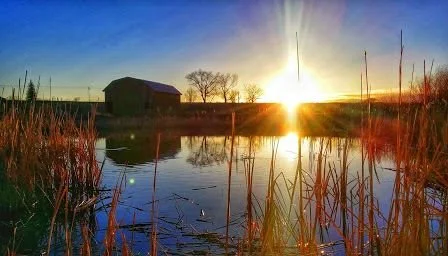
And here I stand
on verdict morning,
the world gone quiet,
a new sky forming.
The truth is out,
nothing left to hide,
yet today I choose
the steadier side.
Not the path of anger,
not the war they want to play,
but the quieter road
that steadies me today.
The road where broken pieces
finally start to heal,
where we gather what remains
and build something real.
A home where only love lives,
where peace can take its place,
and the future finds us wiser
for the storms we had to face.
There is a better way,
and I can feel it now-
the horizon opens wider,
and we rise to meet it now.